
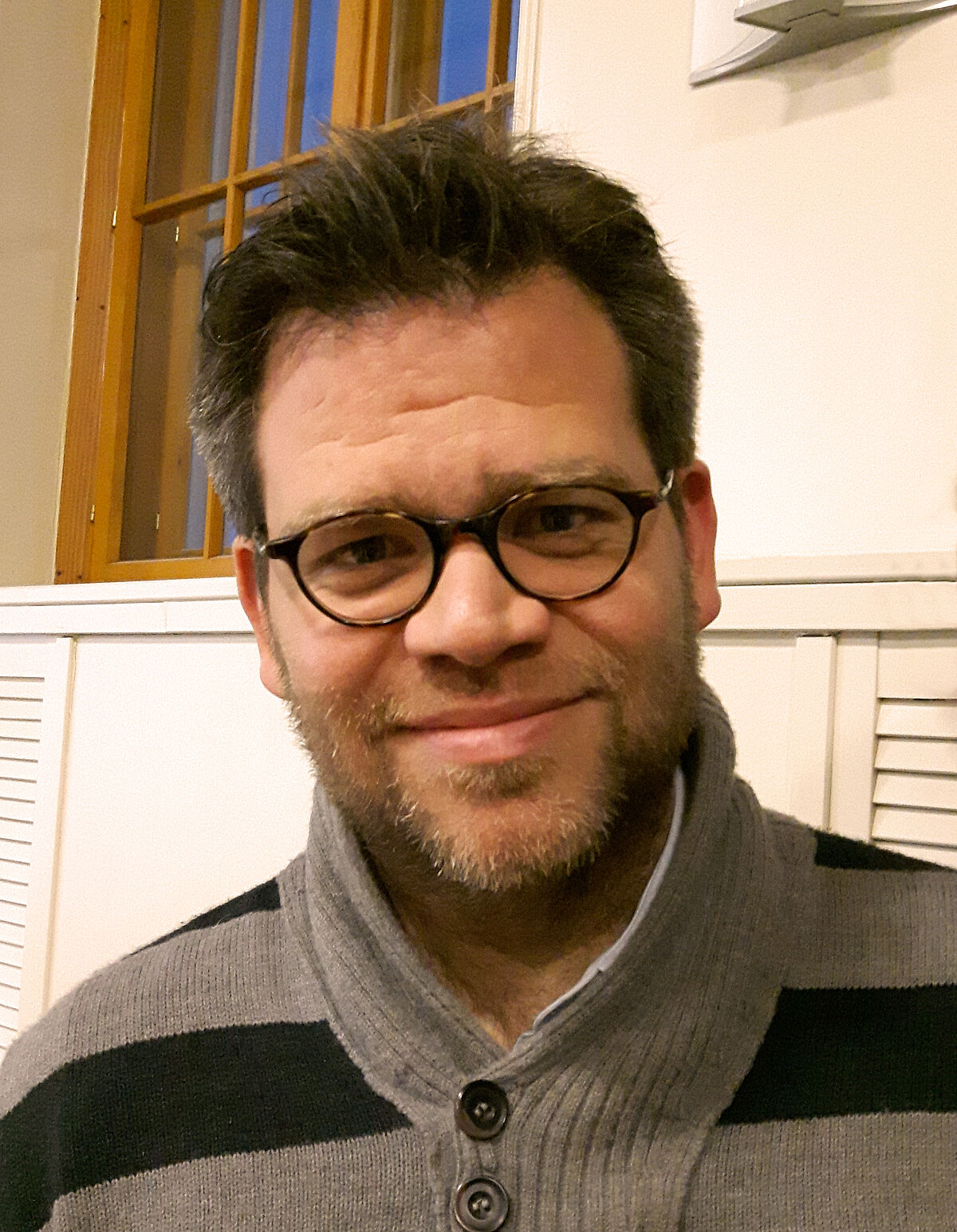
PD Dr. habil. Carsten H.G. Müller
Senior Lecturer
Zoological Institute and Museum
General and Systematic Zoology
Loitzer Str. 26
Building 3.3
17489 Greifswald
Tel.: +49 (0)3834 420-4240
carstmue(at)uni-greifswald(dot)de
camueller2freenetde
Research Interests
My primary area of research is the comparative ultrastructure of sensory and glandular organs, as well as the central and peripheral nervous systems in various invertebrates, including annelids, chaetognaths, brachiopods, and, above all, arthropods. I am interested not only in the ultrastructural organization but also in the functional morphology and evolution of the organs and organ systems under investigation. I use a multimodal microscopic approach, with a focus on transmission electron microscopy (TEM).
Currently, I am particularly interested in the disparity and evolution of sensory and glandular organs associated with reproduction and prey acquisition. My subjects of study include various centipedes (Chilopoda) and spiders (Araneae).
| 06/1992 | High School Diploma |
| 1983–1992 | Dortmund City High School |
| 1979–1983 | Kirchhörder Elementary School in Dortmund |
| 07/2015 | Venia legendi in the Department of Zoology (Ernst Moritz Arndt University of Greifswald) |
| 10/2008–12/2014 | Habilitation at the Zoological Institute and Museum of Ernst Moritz Arndt University of Greifswald |
| 11/2001–12/2007 | Doctoral studies at the Institute of Biological Sciences (Chair of General & Special Zoology) at the University of Rostock |
| 11/1996–04/2001 | Advanced studies in biology at the University of Rostock, focusing on zoology, marine biology, animal physiology, environmental and ecotoxicology |
| 11/1992–08/1996 | Undergraduate studies in biology at Martin Luther University Halle-Wittenberg |
| 10/1992–11/1992 | Studies in geography at Ruhr University Bochum |
| Since April 2015 | Research Associate at the Zoological Institute and Museum of Ernst Moritz Arndt University of Greifswald (General & Systematic Zoology Group, Chair of Prof. Dr. Gabriele Uhl) |
| 04/2014–03/2015 | Research Associate in the Department of Neuroscience (University of Arizona, U.S.A.), postdoctoral research on the centipede brain as part of the Air Force project (PI: Prof. Dr. Nicholas J. Strausfeld, University of Arizona, Tucson, U.S.A.) “Neuronal connections underlying low-level motion processing by Scutigeromorpha (Chilopoda)” |
| 10/2008–12/2014 | Habilitation thesis: “Multimodal microscopic investigations of sensory and glandular organs as well as the nervous system of selected invertebrates of uncertain phylogenetic classification” |
| 10/2008–11/2013 | Research Assistant at the Zoological Institute and Museum of Ernst Moritz Arndt University of Greifswald (Cytology & Evolutionary Biology Group, Chair: Prof. Dr. Steffen Harzsch) |
| 5/2007–4/2008 | Research Associate in the DFG project, Title (PI: Prof. Dr. Stefan Richter, University of Rostock): “Development of the circulatory system in Crustacea” |
| 1/2006–9/2008 | Research Associate in the DFG Priority Program “Metazoan Deep Phylogeny” (SPP 1174); Title of the subproject (PI: Prof. Dr. Steffen Harzsch, then MPI for Chemical Ecology, Jena): “Neurophylogeny: architecture and development of the nervous system, individually identifiable neurons, and the phylogenetic position of the Chaetognatha” |
| 5/2005–3/2007 | Research |
| 7/2017 | DAAD conference grant (for active participation in the 17th International Congress of Myriapodology, Thailand) |
| 2/2016 | Collaborative DFG equipment grant project on the comparative morphology, function, and evolution of terminal legs in selected chilopods (3 years, secured jointly with Dr. A. Sombke, Greifswald) |
| 2/2012 | Collaborative DFG major equipment proposal for µ- and nano-CT (No. INST 292/119-1 FUG G) 2/2012 Collaborative DFG major equipment grant application for µ- and nano-CT (No. INST 292/119-1 FUG G) 2/2012 Collaborative DFG major equipment grant application for µ- and nano-CT (No. INST 292/119-1 FUG G) |
| 6/2011 | DAAD conference grant (for active participation in the 2nd ICIM, Harvard (Cambridge), U.S.A.) |
| 6/2010 | DAAD conference grant (for active participation in the 7th ICC, Qingdao, China) |
| 2002–2005 | State Graduate Scholarship from the State of Mecklenburg-Western Pomerania, 3 years of funding |
| 9/2002 | 1st Poster Award at the 8th Colloquium Crustacea Decapoda Mediterranea (Corfu, Greece, September 2–7, 2002) |
| 04/2014–03/2015 | ssTEM studies of the visual neuropil of Scutigera coleoptrata (Chilopoda), Air Force Grant (Laboratory of Prof. Dr. Nicholas J. Strausfeld, University of Arizona, Tucson, AZ, U.S.A.) |
| 08/2008 | Studies on the ecology, functional anatomy, and development of Spadella cephaloptera (Chaetognatha, in the laboratory of Dr. Yvan Perez, Université d’Aix-en-Provence, Marseille, France) |
| 07/2007 | Electron microscopic studies of the ommatidium of Lamyctes emarginatus (Chilopoda, in the laboratory of Prof. Dr. A. Minelli, University of Padua, Italy) |
| 10/2004 | Ophthalmoscopic studies of compound eyes of Scutigeromorpha and Paguroidea (in the laboratory of Prof. Dr. Dan-Erik Nilsson, Lund University, Lund, Sweden) |
| 10/2003 and 11/2010 | Electrophysiological studies of the eyes of Scutigeromorph and Lithobiomorph centipedes (in the laboratory of Dr. Magnus Lindström, Helsinki University, Tvärminne Zoological Station, Hanko, Finland) |
| 02/2003 | Spectral microscopic studies of the hermit eye, biophysical characteristics of ommatidia with heterogeneous pigment shields (in the laboratory of Prof. Dr. Doekele Stavenga, University of Groningen, Groningen, Netherlands) |
| 50. | Kenning, M; Müller, CHG & Sombke A (2017). The ultimate legs of Chilopoda (Myriapoda): a review on their morphological disparity and functional variability. PeerJ5:e4023; DOI: 10.7717/peerj.4023 |
| 49. | Bleich, S; Müller, CHG; Graf, G & Hanke, W (2017). Flow generation by the corona ciliata in Chaetognatha - quantification and implications for current functional hypotheses. Zoology125: 79-86. |
| 48. | Sentenská, L; Müller, CHG; Pekár, S & Uhl, G (2017). Neurons and a sensory organ in the pedipalps of male spiders reveal that it is not a numb structure. Scientific Reports7:12209; DOI: 10.1038/s41598-017-12555-5 |
| 47. | Gainett, G; Michalik, P; Müller, CHG; Giribet, G; Talarico, G & Willemart RH (2017). Putative thermo-/hygroreceptive tarsal sensilla on the sensory legs of an armored harvestman (Arachnida, Opiliones). Zoologischer Anzeiger 270: 81-97. |
| 46. | Gainett, G; Michalik, P; Müller, CHG; Giribet, G; Talarico, G & Willemart RH (2017). Ultrastructure of chemoreceptive tarsal sensilla in an armored harvestman and evidence of olfaction across Laniatores (Arachnida, Opiliones). Arthropod Structure & Development46: 178-195. |
| 45. | Audo, D; Haug, JT; Haug, C; Charbonnier, S; Schweigert, G; Müller, CHG & Harzsch, S (2016). On the sighted ancestry of blindness - exceptionally preserved eyes of Mesozoic polychelidan lobsters. Zoological Letters2:13; DOI 10.1186/s40851-016-0049-0. |
| 44. | Krieger, J; Braun, P; Rivera, NT; Schubart, CD; Müller, CHG & Harzsch, S (2015). Comparative analyses of olfactory systems in terrestrial crabs (Brachyura): Evidence for aerial olfaction? PeerJ 3:e1433; DOI 10.7717/peerj.1433 |
| 43. | Guggolz, T; Henne, S; Schütz, R; Politi, Y, Maši?, A; Müller, CHG & Meißner, K (2015). Histochemical evidence of [beta]-chitin in parapodial glandular organs and tubes of Spiophanes (Annelida, Sedentaria: Spionidae), and first studies on selected Annelida. Journal of Morphology276: 1433-1447. |
| 42. | Hilken, G; Edgecombe, GD; Müller, CHG; Sombke, A; Wirkner, C & Rosenberg, J (2015). Interaction of the tracheal tubules of Scutigera coleoptrata (Chilopoda, Notostigmophora) with glandular structures of the pericardial septum. ZooKeys510: 233-242. |
| 41. | Rößger, A; Meißner, K; Bick, A & Müller, CHG (2015). Histological and ultrastructural reconstruction of ventral epidermal glands of Spio (Polychaeta, Spionidae, Annelida). Zoomorphology134: 367-382. |
| 40. | Hädicke, CW; Blank, SM; Pohl, H; Müller CHG & Sombke, A (2015). Sensing the world without antennae and eyes: external structure and distribution of sensilla in Eosentomon cf. pinetorum Szeptycki, 1984 and on the protarsus of Acerentomon franzi Nosek, 1965 (Hexapoda: Protura). Soil Organisms87: 29-49. |
| 39. | Müller, CHG; Hylleberg, J & Michalik, P (2015). Complex epidermal organs of Phascolion (Sipuncula): Insights into the evolution of bimodal secretory cells in annelids. Acta Zoologica96: 343-374. |
| 38. | Tuchina, O; Groh, KC; Talarico, G; Müller, CHG; Wielsch, N; Hupfer, Y; Svatos, A; Große-Wilde, E & Hansson, BS (2014). Morphology and histochemistry of the aesthetasc-associated epidermal glands in terrestrial hermit crabs of the genus Coenobita (Decapoda: Paguroidea). PLOS ONE9(5): e96430. |
| 37. | Müller, CHG; Rieger, V, Perez, Y & Harzsch, S (2014). Immunohistochemical and ultrastructural studies on ciliary sense organs of arrow worms (Chaetognatha). Zoomorphology133:167-189. |
| 36. | Müller, CHG; Rosenberg, J & Hilken, G (2014). Ultrastructure,functional morphology and evolution of recto-canal epidermal glands in Myriapoda. Arthropod Structure & Development43: 43-61. |
| 35. | Fischer, S; Meyer-Rochow, VB & Müller, CHG (2014). Compound eye miniaturization in Lepidoptera: a comparative morphological analysis. Acta Zoologica 95: 438-464. |
| 34. | Haug, JT; Müller, CHG & Sombke, A (2013). A centipede nymph in Baltic amber and a new approach for documenting amber fossils. Organisms Diversity & Evolution13: 425-432. |
| 33. | Perez, Y; Rieger, V; Martin, E; Müller, CHG & Harzsch S (2013). Neurogenesis in an early protostome relative: progenitor cells in the ventral nerve centre of chaetognath hatchlings are arranged in a highly organized geometrical pattern. Journal of Experimental Zoology(Part B: Molecular and Developmental Evolution)320: 179-193. |
| 32. | Kenning, M; Müller, CHG, Wirkner, CS & Harzsch, S (2013). The Malacostraca (Crustacea) from a neurophylogenetic perspective: new insights from brain architecture in Nebalia herbstii Leach, 1814 (Leptostraca, Phyllocarida). Zoologischer Anzeiger252: 319-336. |
| 31. | Winkelmann, C; Gasmi, S; Gretschel, G; Müller, CHG & Perez, Y (2013). Description of Spadella valsalinae sp. nov., a neoendemic benthic chaetognath from Northern Adriatic Sea (Croatia) with remarks on its morphology, phylogeny and biogeography. Organisms Diversity & Evolution. 13: 189-202. |
| 30. | Fischer, S; Meyer-Rochow, VB & Müller, CHG (2012). Challenging limits: ultrastructure and size-related functional constraints of the compound eye of Stigmella microtheriella (Lepidoptera: Nepticulidae). Journal of Morphology273: 1064-1078. |
| 29. | Sombke, A; Lipke, E; Kenning, M; Müller, CHG; Hansson, BS & Harzsch, S (2012). Comparative analysis of deutocerebral neuropils in Chilopoda (Myriapoda): implications for the evolution of the arthropod olfactory system and support for the Mandibulata concept. BMC Neuroscience13:3. |
| 28. | Fischer, S; Müller, CHG & Meyer-Rochow, VB (2012). Neither apposition nor superposition: the compound eyes of the chestnut leafminer Cameraria ohridella. Zoomorphology131: 37-55. |
| 27. | Meißner, K; Bick, A & Müller, CHG (2012). Parapodial glandular organs in Spiophanes (Polychaeta: Spionidae) - studies on their functional anatomy and ultrastructure. Journal of Morphology273: 291-311 + suppl. material. |
| 26. | Rieger, V; Perez, Y; Müller, CHG; Lacalli, T; Hansson BS & Harzsch, S (2011). Development of the nervous system in hatchlings of Spadella cephaloptera (Chaetognatha) and implications for nervous system evolution in Bilateria. Development Growth and Differentiation53: 740-759. |
| 25. | Fischer, S; Müller, CHG & Meyer-Rochow, VB (2011). How small can small be: The compound eye of the parasitoid wasp Trichogramma evanescens (Westwood, 1833) (Hymenoptera, Hexapoda), an insect of 0.3-0.4 mm total body size. Visual Neuroscience28: 295-308 |
| 24. | Richter, S, Loesel, R, Purschke, G, Schmidt-Rhaesa, A, Scholtz, G, Stach, T, Vogt, L, Wanninger, A, Brenneis, G, Döring, C, Faller, S, Fritsch, M, Grobe, P, Heuer, CM, Kaul, S, Møller, OS, Müller, CHG, Rieger, V, Rothe, BH, Stegner, MEJ & Harzsch, S (2010). Invertebrate neurophylogeny - suggested terms and definitions for a neuroanatomical glossary. Frontiers in Zoology7: 29. |
| 23. | Heuer, CM; Müller, CHG; Todt, C & Loesel, R (2010). Comparative neuroanatomy suggests repeated reduction of neuroarchitectural complexity in Annelida. Frontiers in Zoology7: 13. |
| 22. | Rieger, V.; Perez, Y.; Müller, CHG; Lipke, E; Sombke, A.; Hansson, BS & Harzsch, S (2010). Immunhistochemical analysis and 3D reconstruction of the cephalic nervous system of Chaetognatha: insights into the evolution of an early bilaterial brain. Invertebrate Biology129: 77-104. |
| 21. | Rosenberg, J. & Müller, CHG. (2009). Morphology in Chilopoda - a survey. Soil Organisms (Suppl.) 81: 1-55. |
| 20. | Müller, CHG & Rosenberg, J (2009). Morphology is still an indispensable discipline in zoology: facts and gaps from Chilopoda. Soil Organisms81: 387-398. |
| 19. | Müller, CHG; Rosenberg, J & Hilken, G (2009). Fine structure and phylogenetic significance of ‚flexo-canal epidermal glands' in Chilopoda. Soil Organisms81: 269-294. |
| 18. | Harzsch, S; Müller, CHG; Rieger, V; Perez, Y; Sintoni, S; Sardet, C & Hansson, BS (2009). Fine structure of the ventral nerve centre and interspecific identification of individual neurons in the enigmatic Chaetognatha. Zoomorphology128: 53-73. |
| 17. | Müller, CHG; Sombke, A & Rosenberg, J (2007). The fine structure of the eyes of some bristly millipedes (Penicillata, Diplopoda): additional support for the homology of mandibulate ommatidia. Arthropod Structure & Development36: 463-476. |
| 16. | Kellner, T; Krech, M; Schulz, A & Müller, CHG (2007). The avifauna of Ibiza: an updated checklist including comments on abundances and ecology. Rostocker Meeresbiologische Beiträge18: 7-29. |
| 15. | Fischer, S; Patzner, RA; Müller, CHG & Winkler, HM (2007). Studies on the ichthyofauna in the coastal waters of Ibiza (Balearic Islands, Spain). Rostocker Meeresbiologische Beiträge18: 31-63. |
| 14. | Müller, CHG & Schubart, CD. (2007). Contribution to the knowledge of the Crustacea Decapoda from the Adriatic Sea: observations from four sampling locations along the Croatian coast. Rostocker Meeresbiologische Beiträge18: 117-135. |
| 13. | Harzsch, S & Müller, CHG (2007). A new look at the ventral nerve centre of Sagitta: implications for the phylogenetic position of Chaetognatha (arrow worms) and the evolution of the bilaterian nervous system. Frontiers in Zoology4:14 (16 p.). |
| 12. | Harzsch, S; Melzer, RR & Müller, CHG (2007). Mechanisms of eye development and evolution of the arthropod visual system: the lateral eyes of Myriapoda are not modified insect ommatidia. Organisms Diversity & Evolution7: 20-32. |
| 11. | Sammler, S; Voigtländer, K; Stoev, P; Enghoff, H & Müller, CHG (2006). New studies on myriapods (Chilopoda, Diplopoda) from Ibiza. Norvegian Journal of Entomology53: 291-301. |
| 10. | Harzsch, S; Melzer, RR & Müller, CHG (2006). Eye development in Myriapoda: implications for arthropod phylogeny. Norvegian Journal of Entomology53: 187-190. |
| 9. | Meyer-Rochow, VB; Müller, CHG & Lindström, M (2006). Spectral sensitivity of the eye of Scutigera coleoptrata (Chilopoda, Scutigeromorpha). Applied Entomology and Zoology41: 117-122. |
| 8. | Rosenberg, J; Müller, CHG & Hilken, G. (2006). Ultrastructural organization of the anal organs in the so-called ano-genital capsule of Craterostigmus tasmanianus Pocock, 1902 (Chilopoda, Craterostigmomorpha). Journal of Morphology267: 265-272. |
| 7. | Müller, CHG & Rosenberg, J (2006). Homology of lateral ocelli in the Pleurostigmophora? New evidence from the retinal fine structure in some lithobiomorph species (Chilopoda: Lithobiidae). Norvegian Journal of Entomology53: 165-186. |
| 6. | Müller, CHG & Meyer-Rochow, VB (2006b). Fine structural description of the lateral ocellus of Craterostigmus tasmanianus Pocock, 1902 (Chilopoda: Craterostigmomorpha) and phylogenetic considerations. Journal of Morphology267: 850-865. |
| 5. | Müller, CHG & Meyer-Rochow, VB (2006a). Fine structural organization of the lateral ocelli in two species of Scolopendra (Chilopoda: Pleurostigmophora): an evolutionary evaluation. Zoomorphology125: 13-26. |
| 4. | Harzsch, S; Müller, CHG & Wolf, H (2005). From variable to constant cell numbers: cellular characteristics of the arthropod nervous system argue against a sister-group relationship of Chelicerata and "Myriapoda" but favour the Mandibulata concept. Development Genes & Evolution215: 53-68. |
| 3. | Müller, CHG; Rosenberg, J; Richter, S & Meyer-Rochow, VB (2003). The compound eye of Scutigera coleoptrata (Linnaeus, 1758) (Chilopoda: Notostigmophora): an ultrastructural reinvestigation that adds support to the Mandibulata concept. Zoomorphology122: 191-209. |
| 2. | Müller, CHG; Rosenberg, J & Meyer-Rochow, VB (2003). Hitherto undescribed interommatidial exocrine glands in Chilopoda. African Invertebrates44: 185-197. |
| 1. | Müller, CHG (2001). Erstnachweis der Flachkrabbe Percnon gibbesi (Crustacea: Decapoda: Grapsidae) für die Balearischen Inseln. Senckenbergiana maritima31: 83-89. |
| 16. | Müller, CHG; Wagenknecht, P & Sombke, A (2017). Ultrastructure and phylogenetic evaluation of the Tömösváry organ in Craterostigmus tasmanianus Pocock, 1902 (Myriapoda: Chilopoda). Tropical Natural History5 (Suppl.): 56, ISSN: 1513-9700 |
| 15. | Müller, CHG; Sombke, A; Thoen, H & Undheim, EAB (2017) Comparative morphology and evolutionary transformation of venom glands in Chilopoda. Tropical Natural History 5 (Suppl.): 42, ISSN: 1513-9700 |
| 14. | Undheim, EAB; Hamilton, BR; Kurniawan, N; Bowlay, G; Brown, DL; Müller, CHG; Cribb, B; Merritt, D; Stow, JL; King, GF; Fry, BG & Venter, DJ (2014). In: Tuf, IH & Tajovský H (Eds.). Centipede venom evolution: Casting light on a neglected group of venomous animals. 16th International Congress of Myriapodology (Olomouc, Czech Republic, 20.-25.7.2014) - Book of abstracts. Palacky University Olomouc, p. 98, ISBN: 978-80-86525-28-0 |
| 13. | Hilken, G; Edgecombe, GD; Müller, CHG; Sombke, A & Rosenberg, J (2014). The tracheal system of three species of Notostigmophora (Chilopoda): Notes on interaction of tracheae with epidermal glands. In: Tuf, IH & Tajovský H (Eds.). 16th International Congress of Myriapodology (Olomouc, Czech Republic, 20.-25.7.2014) - Book of abstracts. Palacky University Olomouc, p. 30, ISBN: 978-80-86525-28-0 |
| 12. | Müller, CHG; Witschel, T; Hönschemeyer, T; Laue, M & Sombke, A (2014). Fine structure of trimodal beak-shaped sensilla of Scutigera coleoptrata (Chilopoda: Scutigeromorpha). In: Tuf, IH & Tajovský H (Eds.). 16th International Congress of Myriapodology (Olomouc, Czech Republic, 20.-25.7.2014) - Book of abstracts. Palacky University Olomouc, p. 62, ISBN: 978-80-86525-28-0 |
| 11. | Müller, CHG & Strausfeld, NJ (2014). Searching for ancestral motion-detecting circuit of Mandibulata. In: Tuf, IH & Tajovský H (Eds.). 16th International Congress of Myriapodology (Olomouc, Czech Republic, 20.-25.7.2014) - Book of abstracts. Palacky University Olomouc, p. 61, ISBN: 978-80-86525-28-0 |
| 10. | Müller, CHG; Rosenberg, J & Sombke, A (2014). The shaft organ of Scutigera coleoptrata: The long-sought hygroreceptor of scutigeromorph centipedes? In: Tuf, IH & Tajovský H (Eds.). 16th International Congress of Myriapodology (Olomouc, Czech Republic, 20.-25.7.2014) - Book of abstracts. Palacky University Olomouc, p. 60, ISBN: 978-80-86525-28-0 |
| 9 | .b>Müller, CHG; Hilken, G & Rosenberg, J (2014). The epidermal glands of Myriapoda: ultrastructural diversity, function and phylogenetic resolving potentials. In: Tuf, IH & Tajovský H (Eds.). 16th International Congress of Myriapodology (Olomouc, Czech Republic, 20.-25.7.2014) - Book of abstracts. Palacky University Olomouc, p. 59, ISBN: 978-80-86525-28-0 |
| 8 | .Rieger, V; Perez, Y; Müller, CHG; Hansson, BS & Harzsch S (2011). Development of the nervous system in hatchlings of Spadella cephaloptera (Chaetognatha). Zitteliana: an International Journal of Palaeontology and Geology (Series B)30: 42. |
| 7. | Müller, CHG (2011). Evolutionary morphological research today and to what extent transmission electron microscopy still contributes to our understanding of phylogenetic interrelationships of invertebrates. In: Jäger, W et al. (Eds.). Proceedings of the Microscopy Conference (Kiel, 28.08.-02.09.2011), Volume 2: Life Sciences. German Society for Electron Microscopy, Kiel: L7-721, ISBN: 978-3-00-033910-3. |
| 6. | Rieger, V; Müller, CHG; Perez, Y; Hansson, B & Harzsch S (2008). Neurogenesis in the arrow worm Spadella cephaloptera (Chaetognatha). Journal of Morphology269: 1483. |
| 5. | Müller, CHG; Rieger, V.; Perez, Y.; Hansson, N. & Harzsch, S (2008). Neurophylogeny of Chaetognatha: can neuroanatomical characters shed light on the phylogenetic position of arrow worms? Journal of Morphology269: 1460-1461. |
| 4. | Müller, CHG; Hilken, G & Rosenberg, J (2008). Fine structure and diversity of 'flexo-canal exocrine glands' on the head of pleurostigmophoran centipedes (Chilopoda). Journal of Morphology269: 1493 (und Peckiana 6: 88-89) |
| 3. | Müller, CHG (2008). Many ways to reach the goal - How evolutionary morphology may help to settle phylogenetic controversies about Myriapoda. Peckiana6:6-7. |
| 2. | Müller, CHG; Rosenberg, J & Hilken, G (2006). On the fine structure of epidermal glands in Chilopoda: structure and phylogenetic aspects. Norwegian Journal of Entomology53: 399. |
| 1. | Rosenberg, J; Müller, CHG & Hilken, G (2006). Ultrastructural organization of the anal organs in the so-called ano-genital capsule of Craterostigmus tasmanianus Pocock, 1902 (Chilopoda, Craterostigmomorpha). Norwegian Journal of Entomology53: 397. |
| 22. | von Byern, J; Müller, CHG; Voigtländer, K; Dorrer, V; Marchetti-Deschmann, M; Flammang, P & Mayer, G (2017). Some examples of bioadhesives for defence and predation. In: Gorb, S (Hrsg.). Functional surfaces in biology. Vol. 3. Springer, Heidelberg, New York. |
| 21. | Müller, CHG; Kenning, M; Hylleberg, J & Michalik, P (in press). Histological and electron microscopic analysis of the papillated epidermal organs of an unknown species of Phascolion (Sipuncula) from Ibiza (Spain). In: Boyle, MJ & Kawauchi, GY (Hrsg.). Proceedings of the 2nd International Symposium on the Biology of the Sipuncula. Smithsonian Institution Scholarly Press, Washington D.C., U.S.A. |
| 20. | Harzsch, S, Perez, Y & Müller, CHG (2016). The nervous system of Chaetognatha (chapter 50). In: Schmidt-Rhaesa A, Harzsch, S & Purschke, G (Hrsg.). Structure and Evolution of Invertebrate Nervous Systems: pp. 652-664. Oxford University Press, Oxford, New York. |
| 19. | Harzsch, S., Müller, CHG. & Perez, Y. (2015). The Chaetognatha. In: Wanninger, A (Hrsg.). Evolutionary Developmental Biology of Bilateria. Vol. 1. Introduction, Non-Bilateria, Acoelomorpha, Xenoturbellida, Chaetognatha: pp. 215-240. Springer, Wien. |
| 18. | Hilken, G, Sombke, A, Müller, CHG & Rosenberg, J (2015). Chapter 6. Diplopoda - Tracheal system. In: Minelli, A (Hrsg.). Treatise on Zoology - Anatomy, Taxonomy, Biology - The Myriapoda II: pp. 129-152. Brill, Leiden. |
| 17. | Müller, CHG & Sombke, A (2015). Chapter 9. Diplopoda - Sense organs. In: Minelli, A (Hrsg.). Treatise on Zoology - Anatomy, Taxonomy, Biology - The Myriapoda II: pp. 181-235. Brill, Leiden. |
| 16. | Perez, Y, Müller, CHG & Harzsch, S (2014). The Chaetognatha: an anarchistic taxon between Protostomia and Deuterostomia. In Wägele, JW & Bartolomaeus, TW & Misof, B (Hrsg.). Deep metazoan phylogeny: The backbone of the tree of life: New Insights from analyses of molecules, morphology, and theory of data analyses: pp. 49-77. Walter de Gruyter, Berlin. |
| 15. | Kapp, H, Müller, CHG & Harzsch, S (2013). Chaetognatha. In: Westheide, W & Rieger, R (Hrsg.). Spezielle Zoologie. Teil 1: Einzeller und Wirbellose Tiere (3. Auflage): pp. 812-817. Elsevier, München. |
| 14. | Müller, CHG, Sombke, A, Hilken, G & Rosenberg, J (2011). Chapter 12. Sense organs. In: Minelli, A (Hrsg.). Treatise on Zoology - Anatomy, Taxonomy, Biology - The Myriapoda. Volume 1: pp. 235-278. Brill, Leiden, 530 p. + 8 Bildtafeln. |
| 13. | Rosenberg, J, Müller, CHG & Hilken, G (2011). Chapter 10. Endocrine system. In: Minelli, A (Hrsg.). Treatise on Zoology - Anatomy, Taxonomy, Biology - The Myriapoda. Volume 1: pp. 197-215. Brill, Leiden, 530 p. + 8 Bildtafeln. |
| 12. | Rosenberg, J, Müller, CHG & Hilken, G (2011). Chapter 9. Excretory system. Nephrocytes. In: Minelli, A (Hrsg.). Treatise on Zoology - Anatomy, Taxonomy, Biology - The Myriapoda. Volume 1: pp. 188-195. Brill, Leiden, 530 p. + 8 Bildtafeln. |
| 11. | Hilken, G, Rosenberg, J & Müller, CHG (2011). Chapter 9. Excretory system. The maxillary organ of the Notostigmophora. In: Minelli, A (Hrsg.). Treatise on Zoology - Anatomy, Taxonomy, Biology - The Myriapoda. Volume 1: pp. 185-188 + 192-195. Brill, Leiden, 530 p. + 8 Bildtafeln. |
| 10. | Hilken, G, Müller, CHG, Sombke, A, Wirkner, CS & Rosenberg, J (2011). Chapter 7. Tracheal system. In: Minelli, A (Hrsg.). Treatise on Zoology - Anatomy, Taxonomy, Biology - The Myriapoda. Volume 1: pp. 137-155. Brill, Leiden, 530 p. + 8 Bildtafeln. |
| 9. | Koch, M, Müller, CHG, Hilken, G & Rosenberg, J (2011). Chapter 6. Digestive system. In: Minelli, A (Hrsg.). Treatise on Zoology - Anatomy, Taxonomy, Biology - The Myriapoda. Volume 1: pp. 121-136. Brill, Leiden, 530 p. + 8 Bildtafeln. |
| 8. | Hilken, G, Rosenberg, J & Müller, CHG (2011). Chapter 4. Integument and associated organs. Bioluminescence. In: Minelli, A (Hrsg.). Treatise on Zoology - Anatomy, Taxonomy, Biology - The Myriapoda. Volume 1: pp. 105-111. Brill, Leiden, 530 p. + 8 Bildtafeln. |
| 7. | Rosenberg, J, Müller, CHG & Hilken, G (2011). Chapter 4. Integument and associated organs. Coxal and anal organs. In: Minelli, A (Hrsg.). Treatise on Zoology - Anatomy, Taxonomy, Biology - The Myriapoda. Volume 1: pp. 98-105 + 106-111. Brill, Leiden, 530 p. + 8 Bildtafeln. |
| 6. | Rosenberg, J, Müller, CHG & Hilken, G (2011). Chapter 4. Integument and associated organs. Aggregated and compound epidermal organs. In: Minelli, A (Hrsg.). Treatise on Zoology - Anatomy, Taxonomy, Biology - The Myriapoda. Volume 1: pp. 84-97 + 106-111. Brill, Leiden, 530 p. + 8 Bildtafeln. |
| 5. | Müller, CHG, Rosenberg, J. & Hilken, G (2011). Chapter 4. Integument and associated organs. Solitary epidermal glands. In: Minelli, A (Hrsg.). Treatise on Zoology - Anatomy, Taxonomy, Biology - The Myriapoda. Volume 1: 70-84 + 106-111. Brill, Leiden, 530 p. + 8 Bildtafeln. |
| 4. | Rosenberg, J, Müller, CHG & Hilken, G (2011). Chapter 4. Integument and associated organs. Integument and cuticle. In: Minelli, A (Hrsg.). Treatise on Zoology - Anatomy, Taxonomy, Biology - The Myriapoda. Volume 1: pp. 67-70. Brill, Leiden, 530 p. + 8 Bildtafeln. |
| 3. | Hilken, G, Minelli, A, Müller, CHG, Rosenberg, J, Sombke, A & Wirkner, CS (2011). Chapter 2. The introduction. History of research. In: Minelli, A (Hrsg.). Treatise on Zoology - Anatomy, Taxonomy, Biology - The Myriaoda. Volume 1: pp. 22-42. Brill, Leiden, 530 p. + 8 Bildtafeln. |
| 2. | Müller, CHG (2008). Vergleichend-ultrastrukturelle Untersuchungen an Augen ausgewählter Hundertfüßer (Mandibulata: Chilopoda) und zur Bedeutung von Augenmerkmalen für die phylogenetische Rekonstruktion der Euarthropoda. Doktorarbeit, Naturwissenschaftliche Fakultät der Universität Rostock, 138 p. + 140 p im Anhang, Cuvillier Verlag, Göttingen, ISBN 978-3-86727-484-5. |
| 1. | Müller, CHG (2007). Ibizas Meereswelt - Struktur und Wandel aus der Sicht eines Biologen. In: Schwetje, W. (Hrsg.). Goodbye Tanit. Ibiza - Zwischen Traum und Trauma: pp. 303-311, Palmyra Verlag, Heidelberg. |
| 1. | Schubart, CD & Müller, CHG (2006). Crustacea and arthropod relationships (Koenemann, S & Jenner, RA (Ed.), 2005, CRC Press, Boca Raton, 423 pp., ISBN 0-8493-3498-5). Systematic Biology55: 693-696. |
1) Comparative ultrastructure of tip-pore sensilla in millipedes and spiders
In hexapods, hair sensilla with wall pores (including sensilla basiconica) are important and well-studied organs of the sense of smell. Outside the Hexapoda, however, these multi-pored sensilla are rare (in millipedes) or entirely absent (spiders). Nevertheless, biochemical, ethological, and/or electrophysiological data indicate that representatives of both arthropod groups are capable of perceiving olfactory stimuli. In this context, sensilla possessing a terminal pore and a specially structured, but non-perforated, shaft cuticle are of interest. Examples of such olfactory sensilla are being examined using TEM on the antennae, walking legs, and terminal legs of the tarantula Scutigera coleoptrata, as well as on the distal podomeres of the walking legs of the wolf spider (Argiope spp.). In addition to addressing questions of evolutionary morphology, we are also interested in elucidating alternative mechanisms by which odorants access the sensille fluid and the receptors located therein.
Collaborators:
Anne-Sarah Ganske (Naturhistorisches Museum Wien, Zoologische Abteilung, Wien, Österreich)
Dr. Andy Sombke (University of Greifswald, Department of Cytology and Evolutionary Biology)
2) Sensory Equipment of the Distal Portions of Spider Palps
Until recently, the bulbs—which serve as sperm carriers during copulation—were considered non-sensory projections of the male palp. However, according to recent transmission electron microscopy (TEM) analyses, this basic assumption can no longer be upheld, as small or large aggregates of embedded sensilla were found at the base of the embolus of some spider species (Sentenska et al. 2017, Scientific Reports 7: 12209). Ultrastructurally, these sensilla resemble the tarsal organs documented in the tarsal segments of the walking legs of various spiders. The discovery is accompanied by the identification of a previously unknown bulb nerve. This nerve contains both afferents from the embedded sensilla cluster and three distinct efferent neurite bundles that innervate, among other things, embolus-associated glandular epithelia. Current TEM analyses aim to localize the pore openings of the embedded sensilla on the embolus. Scanning electron microscopy (SEM) observations in this context indicate a series of mound-like protuberances in the distal third of the embolus. The specific ultrastructure of the dendrite tips (e.g., the presence of a tubular body as an indication of mechanoreception) may provide clues as to whether these sensilla are chemoreceptors or mechanoreceptors.
Collaborators:
Dr. Lenka Sentenská (Masaryk University, Dept. of Botany and Zoology, Brno, Tschechien)
3) Potential applications of the Biowave for optimal chemical fixation of delicate arthropod tissues for TEM
Als beste aller möglichen Methoden für die Konservierung des Cytosols gilt die Cryofixierung, die besonders in der funktionellen Ultrastrukturforschung vielfach mit Erfolg eingesetzt wird. Allerdings sinkt die Effizienz der Cryofizierung mit der Zunahme der Größe bzw. des Durchmessers zu fixierender Gewebe bzw. Körperteile. Auch die glutardialdehyd-basierte Chemofixierung birgt Risiken, da in oder auf den Geweben befindliche Diffusionsbarrieren den Importerfolg des Glutardialdehyds herabsetzen. Dies ist insbesondere bei den Arthropoden ein Problem, welche von einer stark skleroritisierten, ggf. verkalkten Cuticula gepanzert sind. Werden epidermale Sinnes- oder Drüsenorgane mit intracuticulären Anteilen untersucht, dann sind zusätzlich die Möglichkeiten der Präparation eingeschränkt, da die strukturelle Integrität der Zielorgane geschädigt werden kann. Ein klassisches Beispiel für solcherart heikle Untersuchungsobjekte sind die Cheliceren, Palpen oder die Laufbein-Podomere von Spinnen. Der Erfolg einer Chemofixierung kann durch den Einsatz von Mikrowellenstrahlung gesteigert werden. Allerdings ist diese Kombinationsmethode noch nicht feinmorphologische Studien an Spinnen etabliert. Daher wird hier unter Mitwirkung einer technischen Assistentin des Imaging-Zentrums der Fachrichtung Biologie (Leitung: Frau Dr. Rabea Schlüter) eine vergleichende TEM-Studie durchgeführt, in der die Chemofixierungsqualitäten von Beingeweben (Epidermis, Sinnesorgane, Muskulatur) mit und ohne Einsatz einer PELCO BioWave Pro getestet wird. Untersucht werden hierbei distale Laufbeinpodomere der Wespenspinne Argiope blanda. Ziel ist unter anderem die Erstellung eines robusten Präparations- und Fixierungsprotokolls, welches zumindest auch für Vertreter weiterer Teiltaxa der Arachnida angewandt werden kann
4) Vergleichende Ultrastruktur und Evolution von Giftdrüsen bei Hundertfüßern (Chilopoda)
The presence of a single pair of postcephalic venomous claws (maxillipeds) is interpreted as an apomorphy of centipedes. Although there is a fairly accurate understanding of the disparity and evolutionary transformation of maxillipeds within this animal group, an invasive morphological correlate regarding the venom glands located within the maxillipeds is still lacking. Together with colleagues from the University of Greifswald and the University of Queensland (Brisbane, Australia), I am reconstructing the modular structure of the venom glands using selected representatives from all five subgroups of millipedes. A broad spectrum of invasive and non-invasive morphological analysis methods is employed (µ-CT, TEM, immunohistochemistry, semi-thin section histology, paraffin section-based spectroscopy). Accompanying transcriptomic and proteomic analyses are intended to provide insight into the chemical composition of the toxins produced by specific taxa.
For further details on the project and participating partners, see the following link.
5) Structural Diversity and Evolution of the Terminal Legs of Centipedes (Chilopoda)
Segmented legs (arthropodia) are an evolutionary innovation (apomorphy) of the arthropods (Arthropoda). Multiple modifications of what were originally likely two-branched swimming legs led to the development of a wide variety of forms of jointed appendages, including sensory appendages such as antennae and cerci, predatory, defensive, and filtering legs, or grasping organs. Unbranched walking legs (stenopods) evolved independently on multiple occasions. While the antennae of crustaceans, myriapods, and hexapods have been studied quite extensively, knowledge regarding the sensory equipment of the walking legs and hind thoracic legs is comparatively sparse in many arthropod groups. Particularly little is known to date about the terminal legs of centipedes (Chilopoda), although it is precisely these legs—which are usually significantly elongated or thickened—that exhibit a high degree of structural and functional diversification. As part of a DFG project (SO1289/1), various structural specializations are currently being documented using multimodal microscopy (cLSM, immunohistochemistry, SEM, TEM, and semi-thin section histology). The analysis focuses on the antenna-like, multitarsal terminal legs of scutigeromorphs (Scutigeromorpha) and representatives of the centipede genus Newportia (Scolopendromorpha). Ultrastructure-based typological characterizations of the terminal leg sensilla are supplemented by visualizations of the associated neural pathways and electrophysiological recordings from individual sensilla. A comparison with complementary data from the antenna aims to determine whether and to what extent similarly shaped and functionally specialized appendages also exhibit similarities in their sensory equipment and innervation patterns.
For further details on the project and participating partners, see the following link.
1) Neuro- and sensophylogeny of arrow worms (Chaetognatha)
Documentation and ultrastructural reconstruction of ciliary sensory organs (corona ciliata, ciliary fence and tuft organs, eyes); cilia-induced flow patterns over the corona ciliata; Ultrastructural analysis of ventral glandular papillae in Spadellidae; (immuno)histochemical characterization of the peripheral and central nervous systems of selected Sagittidae and Spadellidae; redescription of the species Spadella valsalinae from the northern Adriatic Sea; biogeography of European Spadellidae.
Collaborators:
Prof. Dr. Steffen Harzsch (University of Greifswald, Cytology & Evolutionary Biology)
Dr. Yvan Perez (Aix-Marseille Université, Marseille)
2) Microstructural reconstruction and evolution of epidermal organs in spiny worms (Sipuncula, Annelida)
Description of the sensory and glandular components in smooth and papillary epidermal organs, as well as holdfast papillae in Phascolion cf. strombus; conceptualization of epidermal organs as a new character complex for reconstructing the internal and external phylogeny of the Sipuncula (including bimodal secretory cells).
Collaborators:
PD Dr. Peter Michalik (University of Greifswald, Zoological Museum)
Prof. Dr. Jørgen Hylleberg (Aarhus Universitet, Institute for Bioscience)
3) Evolutionary and functional morphology of solitary and aggregated cutaneous glands in myriapods
Comparative ultrastructure of solitary head glands in Scutigeromorpha, Lithobiomorpha, Craterostigmomorpha, Scolopendromorpha, and Geophilomorpha; distribution, function, and evolution of flexocanal and rectocanal glands; spatial and functional coupling of cutaneous glands with individual sensillae or complex ciliary sensory organs.
Collaborators:
Dr. Jörg Rosenberg (Am Kützelbach 3, D-59494 Soest)
Prof. Dr. Gero Hilken (University of Duisburg-Essen, University Hospital Essen, Central Animal Laboratory)
4) Fine-structural organization, function, and evolution of ciliary sensory organs in centipedes (Chilopoda) and millipedes (Diplopoda)
Fine structure of the shaft organ and adjacent pin sensilla on the second basal segment of the antenna of Scutigera coleoptrata (Chilopoda); Disparity of trimodal sensilla (combination of mechanoreception, olfaction, and gustation) on the antennae of Scutigera coleoptrata; fixation-related structural variations of sensilla components (chemo- vs. high-pressure cryofixation); AMIRA-assisted reconstruction of trimodal sensilla based on ssTEM and serial block photography; fine structure and evolution of Tömösváry’s organs in Phryssonotus platycephalus (Penicillata, Diplopoda) and Craterostigmus tasmanianus (Craterostigmomorpha, Chilopoda).
Collaborators:
Dr. Andy Sombke (University of Greifswald, Department of Cytology and Evolutionary Biology)
Dr. Jörg Rosenberg (Am Kützelbach 3, D-59494 Soest)
Prof. Dr. Gero Hilken (University of Duisburg-Essen, University Hospital Essen, Central Animal Laboratory)
Dr. Michael Laue, (Robert Koch Institute, Berlin)
Dr. habil. Thomas Hörnschemeyer (Senckenberg Society for Nature Research, Scientific IT, DMZ, Biodiversity Informatics)
5) Morphology and Evolution of the Light-Sensory Organs of Brachiopods
Ultrastructure of the ciliary photoreceptors in Joania cordata and Argyroteca cuneata; Significance of brachiopod eye structures for understanding eye evolution within the Bilateria, DFG Project: Lu839/5.
Collaborators:
PD Dr. Carsten Lüter (Museum für Naturkunde Berlin, Leibniz Institute for Evolution and Biodiversity Research)